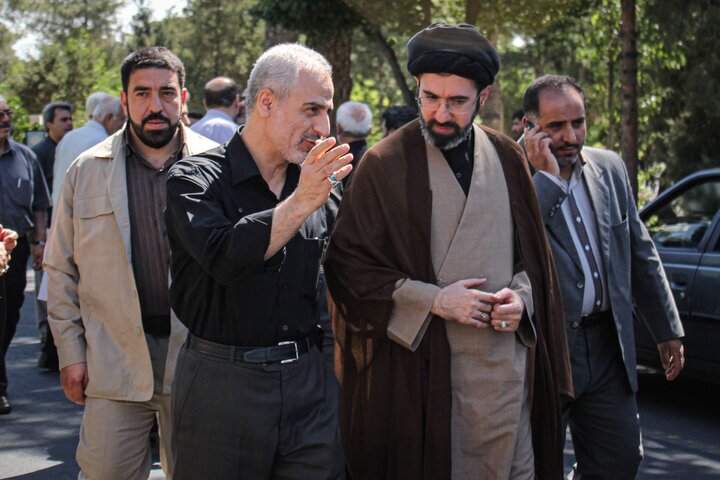
Martyr Mofatteh & Qoba Mosque: Exposing Crimes on the Eve of Revolution
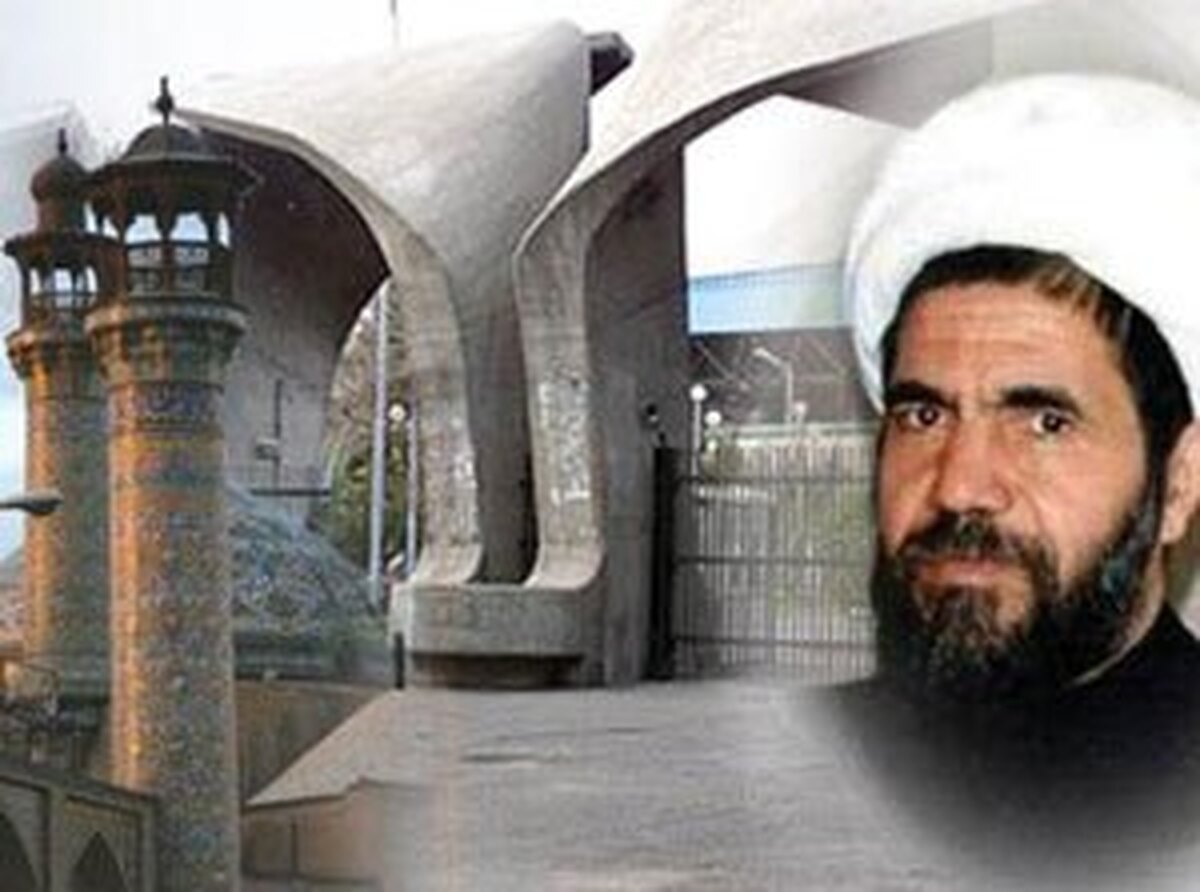
The Qoba Mosque, in those days, had effectively become the center for exposing the regime’s crimes. On the first night of Ramadan in 1357 SH (1978 AD), more than 40,000 people gathered to hear the speech of the Martyr Mofatteh.
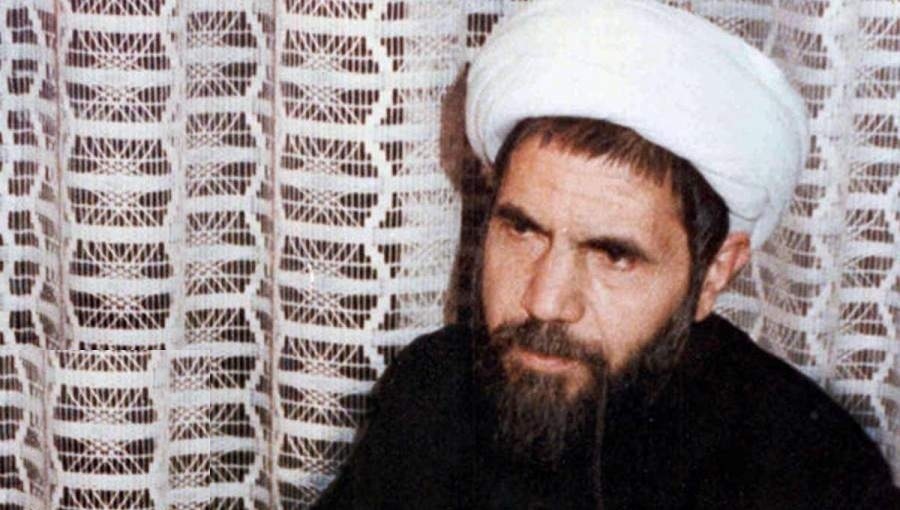
Abolfazl Tavakkoli Bina, a veteran fighter of the Islamic Movement and a companion and friend of Martyr Ayatollah Dr. Mofatteh, shared some of his memories with the Shahed-e Yaran Monthly magazine on the eve of the martyrdom anniversary of this prominent revolutionary figure. We thank him for his kindness.
Interviewer: From what period and how did you become acquainted with Martyr Ayatollah Dr. Mofatteh?
Tavakkoli Bina: Since 1353 SH (1974 AD). At that time, the construction of Qoba Mosque—the land for which was endowed by an individual named Haj Hosseinian—was completed on Zomorod Street (now Shahid Nategh Nouri St.). In the early days of Ramadan, Martyr Haj Taghi Haj Tarkhani and Mr. Seyyed Mohsen Hazavei invited a Mr. Agha Iraqi to serve as the mosque’s Imam. The residents of that area were often educated and intellectual. Although this gentleman was a good person, he was not suitable for that neighborhood. I told the late Haj Tarkhani: “We must find an aware, articulate, intellectual, and eloquent cleric.” He was one of the liaisons for the Association of Islamic Coalition (Hey’at-e Mo’talefeh) and was responsible for the construction of Qoba Mosque.
Interviewer: Why did you invite Martyr Dr. Mofatteh?
Tavakkoli Bina: One Friday morning, a meeting was held at Haj Tarkhani’s house, attended by Messrs. Javad Rafiqdoust, Nejad Hosseinian, Zomorrodian, Sabbaghian, and myself. They asked me to agree to keep Haj Iraqi for another six months, which I refused. They asked: “What is your suggestion?” I replied: “I will consult with Dr. Beheshti!” When Ramadan ended, the mosque was closed under the pretext of repairs! Dr. Beheshti told me: “It would be better to speak with Mr. Motahari about this matter.” Mr. Motahari knew me, and when I raised the issue, he suggested Martyr Mofatteh. I spoke with Martyr Mofatteh. Initially, he refused, but we put him in a difficult position. We went to his house in Qeytarieh with the board of trustees, Martyr Motahari, Martyr Beheshti, and Haj Agha Mahdian. We essentially put him on the spot and accompanied him to the mosque.
Interviewer: How long did he serve as the Imam of Qoba Mosque, and what activities did he undertake?
Tavakkoli Bina: From 1353 SH until his martyrdom. In my opinion, the first cornerstone of the Revolution was laid in this mosque because he managed to draw a congregation of 30,000 to 40,000 people to this mosque, which was an unprecedented event at that time.
Interviewer: In a parenthesis, when and how did you personally enter the political struggle?
Tavakkoli Bina: Since 1325 SH (1946 AD), in the National Oil Movement, where I joined the Amin al-Doleh Mosque group and was one of Ayatollah Kashani’s podium speakers. The Amin al-Doleh Mosque group was a religious faction led by Haj Mehdi Araqi and the late Mr. Asgaroladi, which later, by the decree of the Imam, merged with two other religious groups to form the Association of Islamic Coalition (Hey’at-e Mo’talefeh).
Interviewer: The peak of that activity was the assassination of Hassan Ali Mansour, right?
Tavakkoli Bina: Yes. When the Imam was exiled to Turkey in 1343 SH (1964 AD), the Mo’talefeh concluded that political work would yield no results with this regime, and a number of the regime’s leaders had to be eliminated.
The second meeting of the Central Council lasted from morning until late at night, and finally, we concluded that the Shah, Nasiri, and Hassan Ali Mansour should be removed from the path. Mansour had two established crimes: first, attempting to pass the Capitulation Bill in the Parliament, and second, trying to have the Imam exiled to Turkey. After the approval, the implementation of this plan was assigned to the military branch of the Mo’talefeh, with the responsibility falling on Haj Mehdi Araqi and Haj Sadegh Omoomi. Finally, Mohammad Bokharaei executed Mansour in Bahman 1343 SH (early 1965 AD) in front of the National Consultative Assembly. The brothers had studied religious jurisprudence and were familiar with religious rulings, but they also obtained permission from Ayatollah Milani. Before the assassination, I had been imprisoned three or four times. This time, I was sentenced to two years in prison, while the others received sentences ranging from one to four years.
Interviewer: Didn’t these SAVAK records make them sensitive about your activities at Qoba Mosque?
Tavakkoli Bina: Precisely for this reason, I asked Martyr Mofatteh to remain on the sidelines and not engage in overt activities, only playing a role in decision-making. Therefore, I attended the weekly meetings of the mosque’s board of trustees but did not have any conspicuous activity.
Interviewer: What were the main themes of the mosque’s activities and programs, and what was the public’s—especially the youth’s—attitude toward these activities?
Tavakkoli Bina: The activities mainly revolved around establishing ideological classes and lectures. I remember Ayatollah Marvi from Qom would come to speak about the conduct of the Imams. Political figures of that era, including Engineer Bazargan, also lectured at this mosque. The public reception, especially from the youth, was overwhelmingly positive, and many who later formed various groups were nurtured in this mosque. Sometimes the crowd became so large that the surrounding streets and alleys would fill up. Since 1353 SH (1974 AD), I had moved from Amiryeh to the vicinity of Qoba Mosque, and our homes were ready to host the numerous enthusiasts who came to hear the lectures at Qoba Mosque.
Interviewer: Since Hosseinieh Ershad was also closed, naturally the prosperity of Qoba Mosque increased, right?
Tavakkoli Bina: That is correct. Thus, no other base remained for the gathering of fighters and eager people besides Qoba Mosque. I remember Martyrs Motahari, Beheshti, Bahonar, and Mr. Hashemi Rafsanjani greatly encouraged the holding of these sessions. The goal was for the youth to gain greater awareness so they could form combat cells in the future.
Interviewer: What was SAVAK’s reaction?
Tavakkoli Bina: Because the crowds were so enormous, they monitored from a distance and did not approach. Sometimes officers would come from the Qolhak police station and issue threats, but no one paid attention to them. They also took the board of trustees in several times, but they could not get anything out of them.
Interviewer: One of the most important periods in Martyr Mofatteh’s life was his sermons in 1357 SH and the holding of the Eid al-Fitr prayer on the Qeytarieh hills. What memories do you have regarding this?
Tavakkoli Bina: The Qoba Mosque, in those days, had effectively become the center for exposing the regime’s crimes. On the first night of Ramadan in 1357 SH (1978 AD), more than 40,000 people had gathered to hear his lecture. On the first night, Martyr Mofatteh exposed the Cinema Rex tragedy in Abadan and directly held the government responsible for this crime. Armed officers were present that night, which created a unique atmosphere in the gathering.
The plan to hold the Eid al-Fitr prayer on the Qeytarieh hills was discussed and approved in a meeting of the mosque’s trustees. We chose those hills because they overlooked Shariati Street, allowing us to see the surrounding environment. Many young people worked day and night to remove stones and debris and clean up the area. The officers controlled the scene from afar while also mocking.
Interviewer: How did you inform the people?
Tavakkoli Bina: About a week before Eid al-Fitr, Martyr Mofatteh announced in his sermon that the prayer would be held on the Qeytarieh hills. Consequently, on the day of Eid al-Fitr—Monday, Shahrivar 13, 1357 SH (September 4, 1978)—a flood of people chanting “Allahu Akbar” moved toward Qeytarieh, and the Eid al-Fitr prayer was held with the attendance of over 70,000 people. The sermon was delivered by Martyr Bahonar, after which Martyr Mofatteh spoke a few words, emphasizing leadership by Imam Khomeini, and declared Shahrivar 16th a public holiday to honor the martyrs of Ramadan, calling on people to march on that day. This was the first massive march and demonstration by the people of Tehran. While exposing the tyranny of the Shah’s regime, Zionism, and imperialist regimes, he stressed the necessity of maintaining unity and continuing the struggle under the leadership of Imam Khomeini.
Interviewer: What memory do you have from the march on that day?
Tavakkoli Bina: I remember the military forces had stationed tanks at every intersection, blocking the street. Initially, they fired a few tear gas canisters and tried to stop the crowd, but the number of people was too large, and they couldn’t resist. The women also threw flowers at the soldiers, greatly affecting them. The soldiers kept saying over the loudspeakers that they were just following orders, but they opened the way for the crowd to pass. Finally, the crowd reached Piche Shemiran (Shemiran Bend), where the prayer was led by Martyr Beheshti, and the plan for the march on Shahrivar 16th was set.
Interviewer: You mentioned the historic movement of women in these marches. It would be good if you could share some memories about that too.
Tavakkoli Bina: No one explained and declared the role and importance of women in the Islamic Revolution as well as Imam [Khomeini]. When he returned to Iran, he met with the brothers in the morning at Refah School and with the sisters in the afternoon. Every day, due to the pressure of the crowd, some sisters would faint. His Holiness Imam called me, Martyr Araqi, Mohsen Rafiqdoust, and the late Asgaroladi, and explicitly said: “A situation must be established so that the sisters do not face problems.” Martyr Mahlati asked: “In such conditions, is it forbidden for ladies to come to see you?” The Imam smiled and said: “Did you imagine that you expelled the Shah?” Later, he also said: “Man reaches the zenith of glory from the lap of woman.” No one gave our women their true dignity as much as the Imam.
Interviewer: Tell us about Shahrivar 16th? Your observations of that day’s events must be important and interesting?
Tavakkoli Bina: Yes, on that day, all the Qeytarieh hills were filled with regime agents. When Martyr Mofatteh saw this situation, he went alone to the middle of Shariati Street and started marching southward. A huge crowd followed him with the chants of “Victory is from God and an imminent opening” (
نَصْرٌ مِّنَ اللَّهِ وَ فَتْحٌ قَرِیبٌ
نَصْرٌ مِّنَ اللَّهِ وَ فَتْحٌ قَرِیبٌ
) and “Allahu Akbar.” The crowd increased every moment until, finally, the agents attacked Martyr Mofatteh in Qolhak with bayonets, rifle butts, and guns, severely wounding him so that he could no longer march. But he told the people to continue the march. They took him to the hospital, and after treatment, he returned home. However, the next morning, he was arrested despite his severe injuries and taken to prison. He remained in prison for two months and was released along with other political prisoners when the Revolution intensified and public pressure mounted.
Interviewer: You also mentioned the formation of the Reception Committee and Martyr Mofatteh’s role in it.
Tavakkoli Bina: He, along with a number of clerics, had formed another reception committee and had other responsibilities. I was cooperating with the headquarters group of the Mo’talefeh.
Interviewer: Apparently, you also went to Paris during the Imam’s residence there. What events did you witness during that period?
Tavakkoli Bina: Yes, all groups had gathered in Paris. I called Martyr Araqi and said, “We must also get to the Imam as soon as possible.” Martyr Araqi said, “They won’t give me a passport.” I had an acquaintance in the passport office, and we managed to get a passport within 24 hours and travel to Paris. We reached Neauphle-le-Château at Maghrib (sunset) prayer time. The Imam was praying. After the prayer, we went to the Imam, and he ordered us to stay and organize the work. Some people there insisted that the Imam should not return to Iran, to which he replied, “These very insistences show that I must return sooner.” It was decided that we, along with some friends, would form the Imam’s Reception Headquarters at Refah School. Each group acted according to its own preferences, but we stationed 8,000 personnel at Behesht-e Zahra Cemetery and secured the area where the Imam was to speak with a metal structure. Our resources included a number of station wagons, high-range walkie-talkies, and a helicopter. The engine of the car carrying the Imam ran out of fuel near Behesht-e Zahra, and we had to transport the Imam to Behesht-e Zahra by helicopter.
Interviewer: And as a final question, which of Martyr Ayatollah Mofatteh’s characteristics stand out most prominently in your mind?
Tavakkoli Bina: He was extremely organized, logical, and personable with people. He never acted unilaterally and always deferred to the collective opinion.
End of message/